
- By Rezaul Islam
- October 22, 2026
Introduction
Many small businesses do not realize that their accounting records have become disorganized until they need financial statements, prepare for tax filing or apply for financing.
Maybe the books are three months behind. Perhaps the bank account does not reconcile. Maybe there are duplicate transactions, unexplained balances or old invoices that nobody has followed up.
These are common problems—and they can usually be fixed.
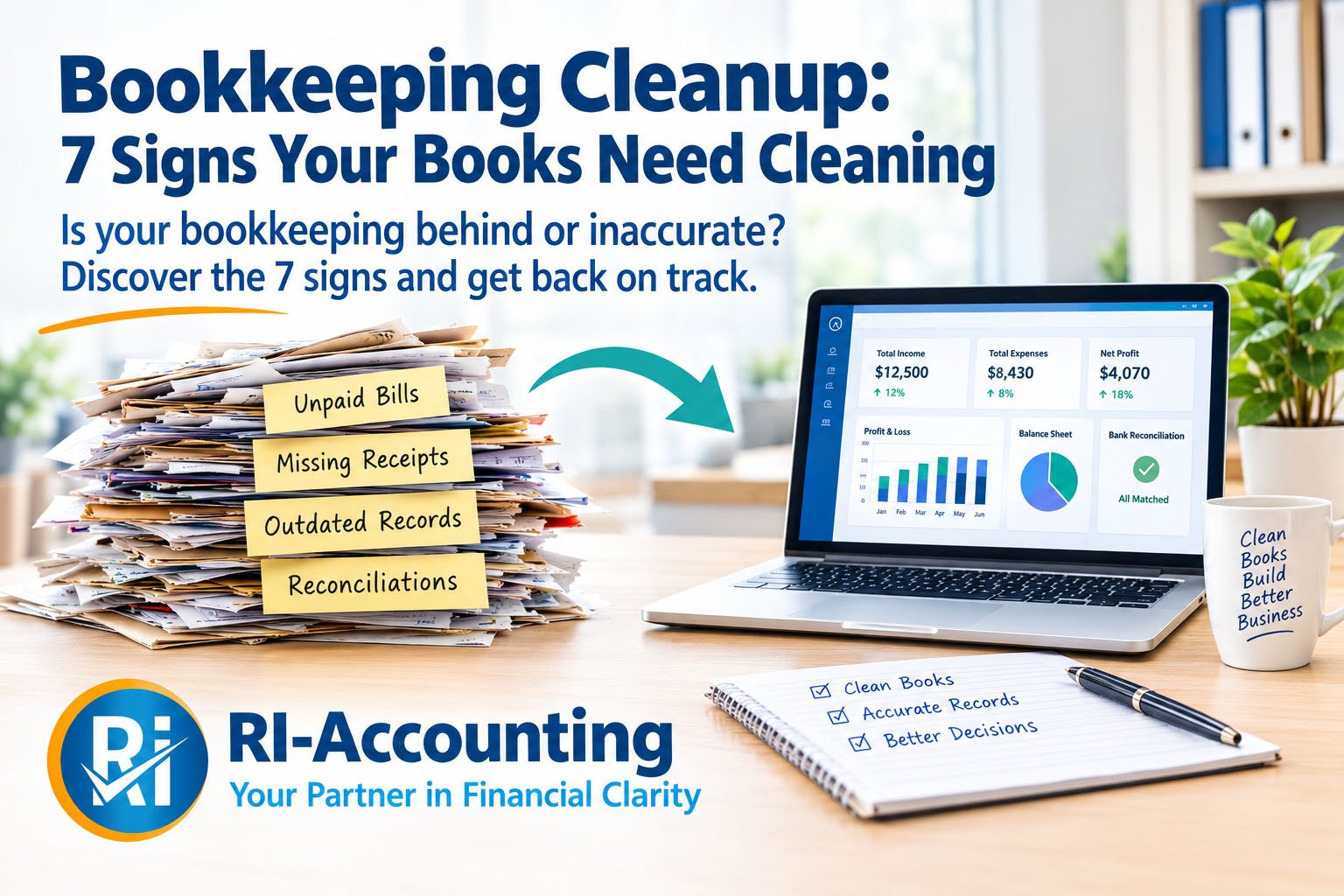
Here are seven signs that your business may need a bookkeeping cleanup.
1. Your Books Are Several Months Behind
If transactions are not recorded regularly, financial information becomes increasingly unreliable.
The longer bookkeeping is postponed, the more difficult the cleanup can become.
2. Your Bank Account Does Not Reconcile
A bank reconciliation difference may indicate:
-
Missing transactions
-
Duplicate transactions
-
Incorrect entries
-
Unrecorded bank charges
-
Timing differences
Repeated reconciliation problems should not simply be carried forward.
3. You Have Old Unexplained Balances
Accounts such as suspense accounts, undeposited funds or miscellaneous expenses should not accumulate indefinitely without explanation.
These balances need to be reviewed and properly classified.
4. Your Profit Does Not Match Your Expectations
Sometimes the problem is not business performance—it is accounting accuracy.
Incorrect expense classifications, missing transactions or duplicated entries can distort profitability.
5. You Have Large Outstanding Receivables
Old unpaid invoices can create a misleading picture of sales and cash flow.
A bookkeeping cleanup should include reviewing outstanding receivables and identifying overdue amounts.
6. Your Financial Reports Cannot Be Trusted
Ask yourself:
“If I needed an accurate Profit & Loss statement today, could I produce one confidently?”
If the answer is no, your accounting system may need attention.
7. You Are Spending Too Much Time on Bookkeeping
Business owners should focus on running their businesses.
If bookkeeping consumes hours every week without producing reliable information, professional support may be worthwhile.
What Does an Accounting Cleanup Usually Include?
Depending on the situation, a cleanup project may include:
-
Reviewing the chart of accounts
-
Reconciling bank accounts
-
Reconciling credit cards
-
Reviewing accounts receivable
-
Reviewing accounts payable
-
Identifying duplicate transactions
-
Correcting misclassified transactions
-
Reviewing opening balances
-
Clearing appropriate suspense balances
-
Catching up missing bookkeeping
-
Preparing reliable financial reports
Cleanup First, Then Monthly Bookkeeping
For businesses with disorganized records, the best approach may be:
Step 1: Cleanup existing records
Step 2: Reconcile accounts
Step 3: Establish a proper bookkeeping process
Step 4: Maintain books monthly
This prevents the same problems from returning.
Conclusion
Messy accounting does not mean your business is failing. It simply means your financial records need attention.
The earlier you identify the problem, the easier it usually is to correct.
Is Your Bookkeeping Behind?
RI-Accounting provides accounting cleanup and catch-up bookkeeping services for small businesses, startups and organizations.
We can review your current records, identify the major issues and recommend a practical cleanup approach.
Book a Free 20-Minute Consultation.